
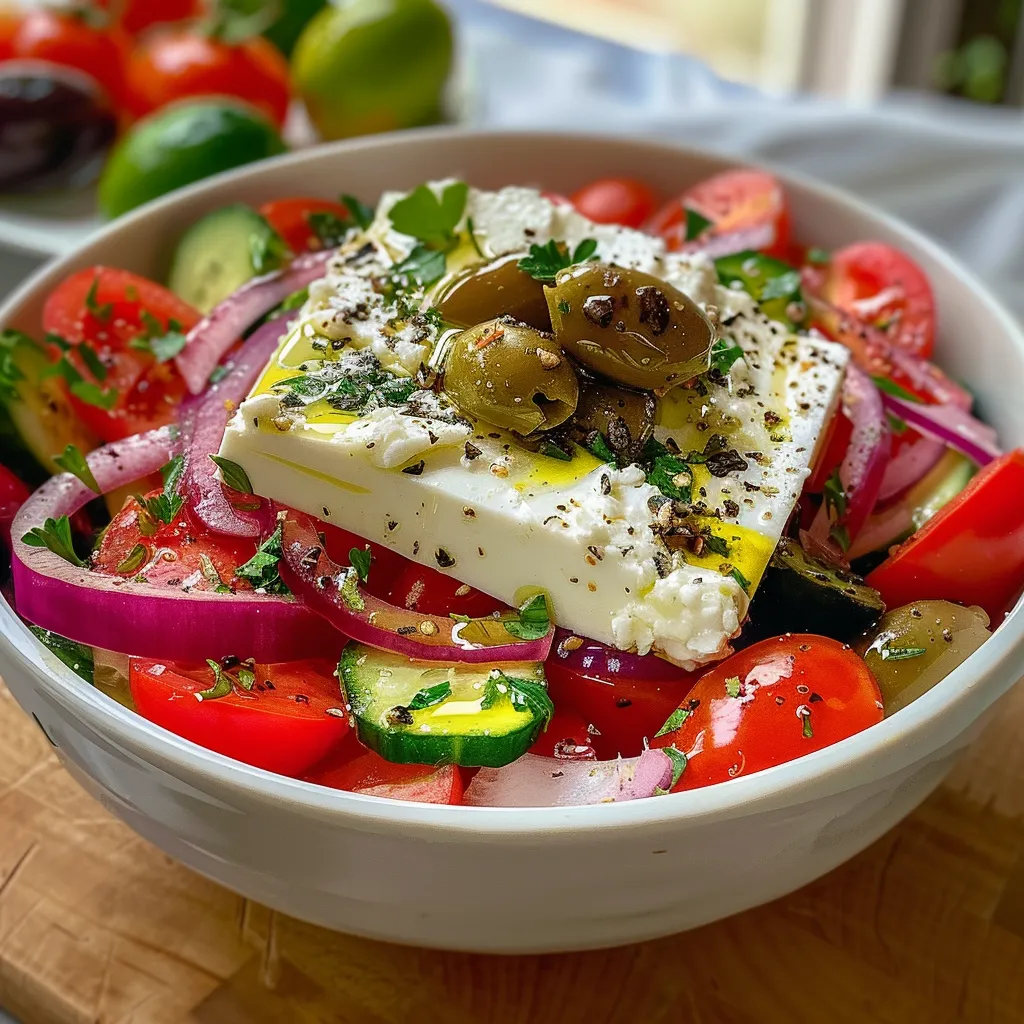
Discover the Rich Heritage of Greek Salad
Welcome to a culinary journey that takes us through the vibrant flavors of Greek salad. This beloved dish, also known as griechischer salat, is a celebration of fresh ingredients and heartfelt traditions. With each bite, you’ll experience the warmth of summer days, the laughter around the family table, and the joy of sharing meals that nourish both body and soul. Let’s dive into this classic recipe that embodies the essence of love and community in cooking.
Why You’ll Love This Greek Salad Recipe
This isn’t just any salad; it’s a beautiful medley of flavors and textures that come together in perfect harmony. Here are five reasons why this griechischer bauernsalat will become a staple in your kitchen:
- Freshness at its Best: With ripe tomatoes, crisp cucumbers, and tangy feta, this salad bursts with flavors that remind you of sunny Mediterranean afternoons.
- Simple & Quick Preparation: In less than 20 minutes, you can create a delightful dish that’s perfect for busy weeknights or impromptu gatherings.
- Versatile & Customizable: Add your favorite protein or make it vegan to suit your dietary preferences. This salad adapts beautifully to what you have on hand.
- Heart-Healthy Ingredients: Packed with fresh vegetables and healthy fats from olive oil, this salad supports a balanced diet while being incredibly satisfying.
- Perfect for Sharing: Greek salad is meant to be enjoyed with others, making it a wonderful addition to any family meal or social gathering.
Ingredients for Classic Greek Salad
Let’s explore the ingredients that bring this salad to life, along with some delightful substitutions to suit your taste:
- 3 Medium Ripe Tomatoes (or vine-ripened tomatoes, about 300 g): These should be juicy and flavorful.
- 2 Mini Cucumbers (about 300 g, sliced lengthwise): For a sweet crunch, consider using English cucumbers.
- 1 Medium Red Onion (about 45 g, thinly sliced): Adds a mild sweetness; soak it in water for a milder flavor if desired.
- 60 g Kalamata Olives (pitted): Their rich flavor enhances the salad beautifully.
- 150 g Greek Feta Cheese (diced or crumbled): Opt for authentic Greek feta for the best taste.
- 4 tbsp Extra Virgin Olive Oil (about 60 ml): A drizzle of high-quality olive oil elevates the dish.
- 1 tbsp Red Wine Vinegar: Adds a delightful tang.
- ½ tsp Dried Oregano: A must-have for that Mediterranean flavor.
- Sea Salt & Freshly Ground Black Pepper: To taste, enhancing all the flavors.
How to Prepare Your Greek Salad
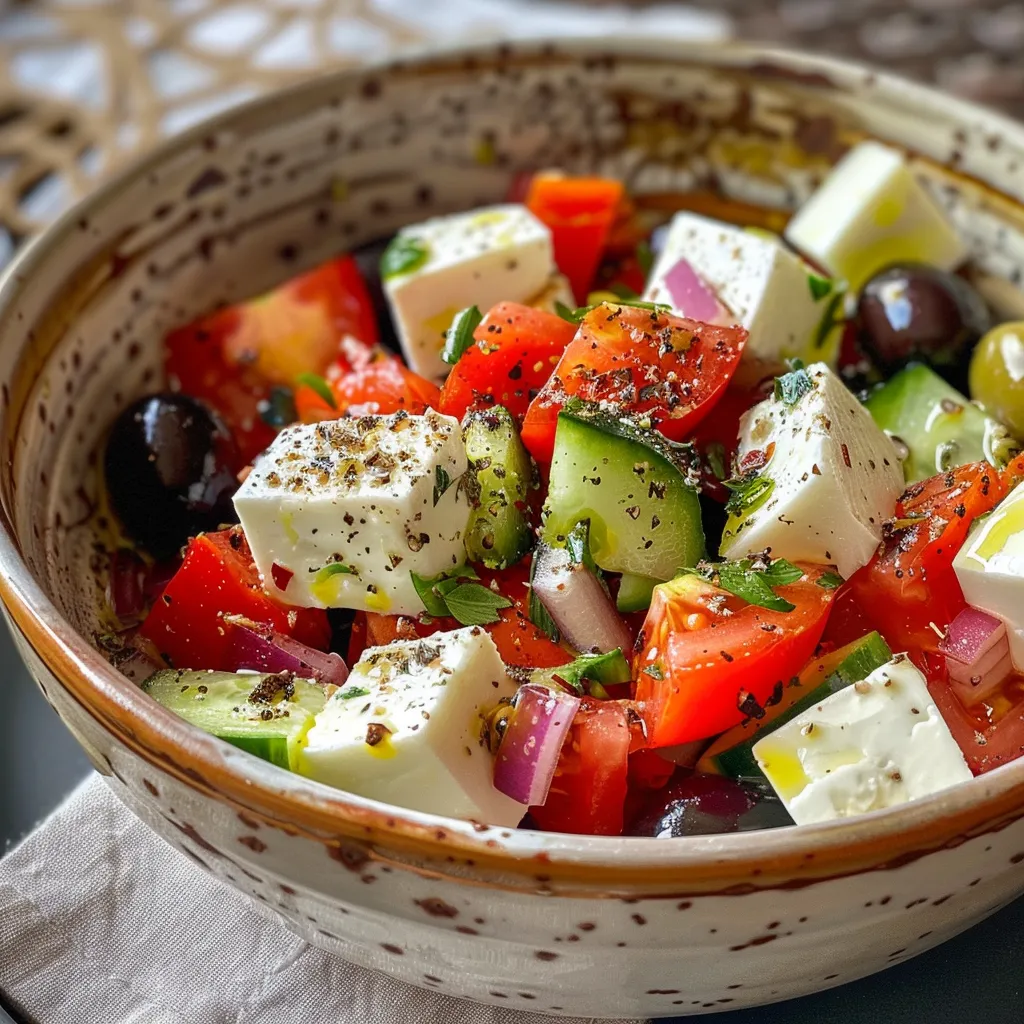
This straightforward recipe allows you to create a beautiful salad that’s ready to impress. Here’s how:
- In a large bowl, combine the chopped tomatoes, cucumbers, red onion, and Kalamata olives.
- Gently fold in the feta cheese, taking care not to break it too much.
- In a small bowl, whisk together the olive oil, red wine vinegar, and dried oregano until well emulsified. Season with salt and pepper to taste.
- Drizzle the dressing over the salad and toss gently to combine. Serve immediately for the freshest taste. Enjoy!
Pro Tips for the Perfect Greek Salad
Crafting the perfect Greek salad is an art, and here are some expert tips to ensure you achieve a delightful result:
- Quality Ingredients: Use the freshest vegetables and high-quality olive oil for the best flavor.
- Chill Your Ingredients: Cooling your ingredients beforehand enhances the overall freshness.
- Salt the Tomatoes: Letting salted tomatoes sit for a few minutes can help release their juices, adding to the dressing.
- Customize with Proteins: Add grilled chicken, chickpeas, or even shrimp for a heartier meal.
- Keep It Traditional: Avoid adding ingredients like lettuce, which is not traditional in Greek salad.
- Make Ahead: Prepare the salad without the dressing and store it in the fridge for up to two days. Add the dressing just before serving.
- Experiment with Herbs: Fresh herbs like basil or mint can elevate the flavors further.
- Serving Temperature: Greek salad is best served at room temperature, allowing all flavors to mingle.
Common Mistakes and Troubleshooting
Even simple recipes can have pitfalls. Here are some common mistakes to avoid:
- Overdressing: Too much dressing can overpower the fresh flavors; start with a little and add more as needed.
- Using Low-Quality Feta: Opt for authentic Greek feta, as it makes a significant difference in taste.
- Cutting Vegetables Too Small: Ensure your veggies are cut into sizable pieces to maintain their crunch.
- Skipping the Oregano: This herb is essential for an authentic Greek flavor profile.
Variations on Greek Salad
One of the joys of Greek salad is its adaptability. Here are some variations to inspire you:
- Vegan Greek Salad: Replace feta with avocado or a vegan cheese alternative.
- Grilled Greek Salad: Grill the vegetables to add a smoky flavor that enhances the dish.
- Quinoa Greek Salad: Add cooked quinoa for a protein-packed twist.
- Fruit-Infused Greek Salad: Incorporate fruits like watermelon or strawberries for a refreshing summer version.
Storage and Make-Ahead Instructions
Greek salad is best enjoyed fresh, but you can make it ahead of time with some careful storage tips:
- Refrigerate: Store in an airtight container in the fridge for up to two days. Keep the dressing separate until serving.
- Keep Ingredients Separate: If you have leftover salad, store the components separately to maintain freshness.
Frequently Asked Questions
Here are some common questions and answers about Greek salad:
- Can I use other vegetables? Yes, add bell peppers or radishes for extra crunch.
- What type of olives should I use? Kalamata olives are traditional, but you can use black or green olives as well.
- Is Greek salad gluten-free? Yes, all the ingredients are naturally gluten-free.
- How can I make it spicier? Add sliced jalapeños or a pinch of red pepper flakes for heat.
- Can I add nuts? Yes, toasted pine nuts or walnuts can add a nice crunch.
- What dressing do you recommend? The classic olive oil and vinegar dressing pairs perfectly with the salad.
- How do I prevent sogginess? Avoid adding dressing until you’re ready to serve.
- What protein pairs well with Greek salad? Grilled chicken, shrimp, or chickpeas are wonderful additions.
Nutritional Tips and Dietary Adaptations
This dish is not only delicious but also nutritious. Here’s how to adapt it for various dietary needs:
- Low-Carb Option: Skip the olives or feta to reduce carbs.
- Keto-Friendly: Stick to low-carb vegetables and quality fats like olive oil.
- High-Protein Additions: Include grilled chicken or chickpeas for a protein boost.
- Dairy-Free Option: Use a dairy-free cheese or avocado instead of feta.
Equipment Recommendations
To make your Greek salad, you’ll need a few essential kitchen tools:
- Sharp Knife: For chopping vegetables with ease.
- Cutting Board: A sturdy surface is key for prep.
- Large Mixing Bowl: For combining all your ingredients.
- Whisk: To mix your dressing until emulsified.
Serving Suggestions for Your Greek Salad
This salad is versatile and can be served in various ways:
- As a Starter: Serve small portions as a refreshing appetizer.
- As a Main Dish: Pair with grilled meat or fish for a hearty meal.
- At a Picnic or BBQ: Its portability makes it perfect for outdoor gatherings.
- As a Side Dish: Complement grilled dishes or Mediterranean spreads.
Conclusion: A Delicious Tradition to Share
As we wrap up our journey through the flavors of Greek salad, remember that cooking is about more than just the food; it’s about the stories we create and the love we share. Whether you’re enjoying this salad at a family dinner or a summer gathering, it’s a reminder that food, like love, is best when shared. So gather your loved ones, create this beautiful salad, and celebrate the simple joys of cooking together. Happy cooking!
Klassischer Griechischer Salat
Ingredients
Vegetables
- 300 g Eiertomaten (in Scheiben geschnitten)
- 300 g Mini-Gurken (der Länge nach in Scheiben geschnitten)
- 45 g Rote Zwiebel (in dünne Scheiben geschnitten)
- 60 g Kalamata Oliven (entsteint)
- 150 g Griechischer Fetakäse (gewürfelt oder gekrümelt)
Dressing
- 60 ml Natives Olivenöl extra
- 15 ml Rotweinessig
- 0.5 tsp Trockener Oregano
Seasoning
- to taste Meersalz und frisch gemahlener schwarzer Pfeffer
Instructions
- Vermische Tomaten, Gurke, Zwiebel und Oliven in einer großen Schüssel. Füge den Feta hinzu.
- Verrühre in einer kleinen Schüssel Olivenöl, Rotweinessig und Oregano. Würze mit Salz und Pfeffer.
- Gieße das Dressing über den Salat und mische vorsichtig. Sofort servieren.
